

A successful business launch requires far more than a great idea and motivation. Entrepreneurs who build sustainable companies understand that preparation, structure, and strategic planning create the foundation for long-term growth. While excitement can fuel momentum, a carefully organized launch process helps reduce costly mistakes and positions a business for lasting success.
Many startups fail because they rush into the market without validating their concept, organizing operations, or developing a strong brand identity. A thoughtful launch strategy allows entrepreneurs to move from uncertainty to confidence while creating systems that support growth from day one.
This step-by-step blueprint outlines the essential stages every entrepreneur should follow when preparing for a professional and effective business launch.
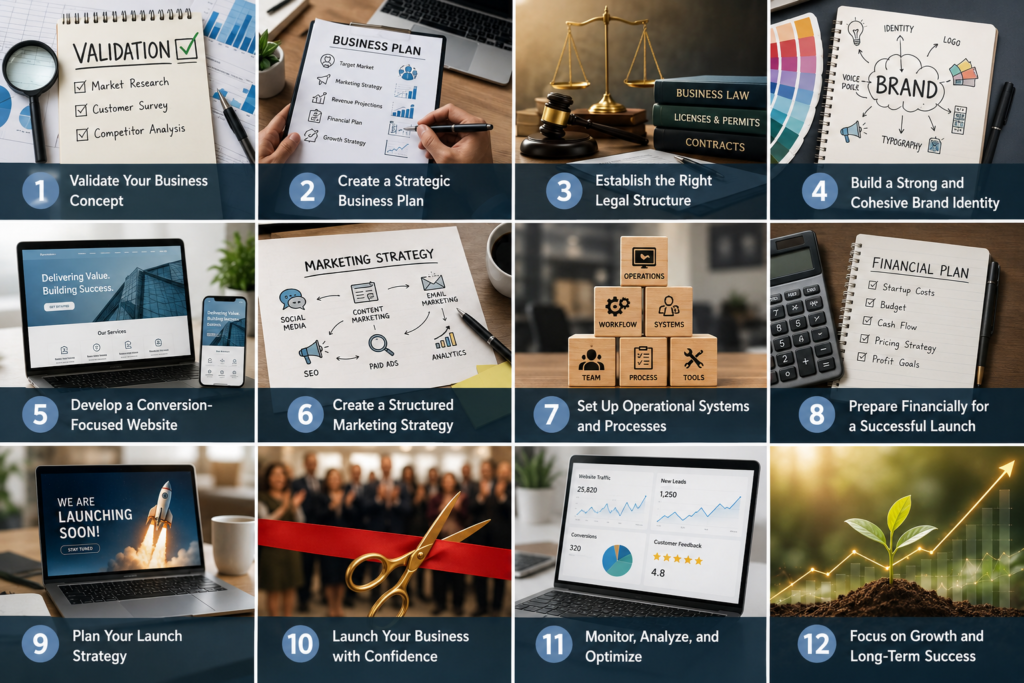
Validate Your Business Concept Before Launching
Before investing significant time or money into a new venture, entrepreneurs must confirm that their idea solves a genuine problem in the marketplace. Validation helps determine whether there is enough demand to support long-term success.
Business validation can include:
- Market research
- Competitor analysis
- Customer surveys
- Focus groups
- Pilot offers or beta testing
Research provides valuable insight into customer pain points, buying behavior, and industry gaps. Understanding competitors also helps identify opportunities for differentiation.
Testing your offer before a full business launch minimizes financial risk and increases confidence in your value proposition. Entrepreneurs who rely on data-driven decisions are better equipped to refine their services, pricing, and marketing strategies before entering the market.
Validation also creates clarity. Instead of guessing what customers want, you gain direct feedback from the audience you intend to serve.
Create a Strategic Business Plan
A business plan acts as the operational roadmap for your company. It outlines your goals, strategies, financial expectations, and execution process.
An effective business plan should include:
- Target audience details
- Product or service descriptions
- Pricing structure
- Revenue projections
- Marketing strategy
- Operational workflows
- Growth objectives
Without a structured plan, entrepreneurs often make reactive decisions that lead to confusion and inconsistency. Strategic planning reduces uncertainty and helps business owners stay focused on measurable goals.
A well-developed plan also becomes essential when seeking funding, partnerships, or investors. Financial institutions and stakeholders want to see clear projections and evidence of preparation.
Every successful entrepreneur benefits from documented strategy because planning improves execution and accountability.
Establish the Right Legal Structure
Legal preparation is one of the most important steps in building a credible and protected business. Choosing the appropriate legal structure helps separate personal and business liabilities while supporting future growth.
Entrepreneurs should consider:
- Registering the business name
- Forming an LLC or corporation
- Obtaining necessary licenses and permits
- Creating contracts and legal agreements
- Securing intellectual property protection
Skipping legal preparation can expose business owners to unnecessary risks. Proper registration and compliance help establish professionalism and build trust with clients and partners.
Contracts are equally important. Clear agreements protect both parties and reduce misunderstandings regarding payment terms, deliverables, timelines, and expectations.
Professional businesses prioritize legal protection early in the launch process because stability creates confidence for both owners and customers.
Build a Strong and Cohesive Brand Identity
Brand identity is more than a logo. It represents how customers perceive your company and how your business communicates value in the marketplace.
A cohesive brand identity includes:
- Logo design
- Color palette
- Typography
- Brand messaging
- Voice and tone
- Audience positioning
Strong branding creates recognition and trust. Customers are more likely to engage with businesses that appear professional, consistent, and aligned with their needs.
Your messaging should clearly explain:
- Who you help
- What problem you solve
- Why your business is different
Consistency across your website, social media platforms, email marketing, and promotional materials strengthens credibility.
Before your first sale, your brand should already communicate professionalism and confidence.
Develop a Conversion-Focused Website
A professional website serves as the digital headquarters of your business. It acts as a marketing platform, lead generation tool, authority builder, and sales system.
An effective website should include:
- A clear value proposition
- User-friendly navigation
- Strong calls-to-action
- Mobile responsiveness
- SEO optimization
- Service or product details
- Contact information
- Trust-building elements
Website visitors make rapid judgments about credibility. A poorly designed or outdated website can negatively impact trust and conversions.
Search engine optimization is also critical for visibility. Incorporating relevant keywords, optimizing page structure, and creating high-quality content improves your ability to attract organic traffic.
Your business launch should include a website that not only looks professional but also supports customer action and long-term growth.
Create a Structured Marketing Strategy
Even exceptional businesses struggle without visibility. Marketing preparation is essential before launching to the public.
A structured marketing plan may include:
- Social media campaigns
- Email marketing funnels
- Content marketing
- Search engine optimization
- Paid advertising
- Promotional partnerships
- Launch countdown campaigns
Planning marketing activities in advance ensures consistent messaging and organized execution. Entrepreneurs who wait until after launch to market their business often experience slower growth and reduced visibility.
Content marketing is especially valuable because it positions your business as an authority while building trust with potential customers.
A strong business launch strategy includes both short-term promotion and long-term audience engagement.
Implement Operational Systems Before Launch
Operational systems create efficiency and improve the customer experience. Without organized systems, businesses often become overwhelmed as demand increases.
Before launching, establish processes for:
- Payment processing
- Client onboarding
- CRM management
- Scheduling and communication
- Project management
- File organization
- Customer support
Preparation improves consistency and reduces errors during periods of growth.
Automation tools can also streamline repetitive tasks, allowing entrepreneurs to focus on strategy and customer relationships instead of administrative work.
Clients notice professionalism when communication, invoicing, onboarding, and service delivery operate smoothly. Operational readiness directly impacts reputation and retention.
Launch With Confidence and Stay Adaptable
Once preparation is complete, it is time to execute your launch plan confidently. However, successful entrepreneurs understand that launch day is only the beginning.
After your business goes live, monitor key performance indicators such as:
- Website traffic
- Conversion rates
- Customer feedback
- Marketing performance
- Revenue trends
- Operational efficiency
Data analysis helps identify strengths and areas requiring improvement.
Flexibility is essential during the early stages of growth. Businesses that adapt quickly to customer needs and market conditions often outperform competitors over time.
Continuous refinement allows entrepreneurs to strengthen systems, improve customer experiences, and increase profitability after the initial business launch phase.
Forbes Advisor – How to Start a Business: This comprehensive guide from Forbes covers the essential stages of starting and growing a successful business, including planning, funding, legal registration, launch preparation, and long-term profitability strategies.
Why Preparation Determines Long-Term Success
Many entrepreneurs underestimate the importance of preparation because they focus heavily on speed. However, businesses built on strong foundations are more likely to survive economic shifts, competition, and operational challenges.
Preparation provides:
- Greater clarity
- Reduced risk
- Improved customer trust
- Stronger systems
- Better scalability
- Increased professionalism
Launching a business without strategy often creates unnecessary stress and financial setbacks. Entrepreneurs who prioritize planning position themselves for sustainable growth rather than short-term momentum.
Success rarely happens by accident. Structured execution consistently produces stronger outcomes.
Conclusion
A successful business launch is the result of intentional planning, legal preparation, strategic branding, operational readiness, and consistent marketing. Entrepreneurs who validate their ideas, create structured systems, and build strong customer experiences increase their chances of long-term success.
From concept development to post-launch evaluation, every stage plays a critical role in building a sustainable business foundation. Preparation transforms uncertainty into confidence and helps entrepreneurs approach growth with clarity and professionalism.
If you are preparing to launch your business, now is the time to build a roadmap that supports both immediate momentum and long-term success. Begin your entrepreneurial journey with strategy, structure, and confidence by booking a Blueprint Session to create your customized launch plan.
Avoid first-year setbacks by investing in our Full Blueprint Package — a complete solution designed to build, structure, and scale your business the smart way. Get the tools, strategy, and support you need to grow with confidence.
Explore our blog for more insights and helpful information.
Click here to learn more about our Business Development Consulting services.
Have questions or feedback? Visit our Contact page (click here) — we’d love to hear from you.